

Decor

Nightstand Height, Size, and Placement Rules
A nightstand looks simple, but it works hard every day, which is why height, size, and placement matter more than most people expect. We see many bedrooms in Toronto homes where the bed feels right but the nightstand feels off, usually because one basic rule was missed. In this guide, we explain how to choose the right nightstand height, how to size it for your space, and how to place it so your bedroom feels balanced and easy to use.
Start With the Right Nightstand Height
The most important rule is that your nightstand should sit close to the height of your mattress. In most bedrooms, the top of the nightstand should be level with the top of the mattress or up to two inches lower.
This height keeps everything within reach when you are lying down. Your phone, lamp, glasses, or book should be easy to grab without sitting up or stretching. When a nightstand is too low, it feels disconnected from the bed. When it is too high, it looks bulky and blocks sightlines.
Standard mattress heights usually fall between 22 and 25 inches from the floor. For most beds, a nightstand between 22 and 24 inches tall works well. Platform beds often sit lower, so a 18 to 22 inch nightstand makes more sense. Taller beds with thick mattresses may need nightstands closer to 26 inches.
If your bed frame has a tall rail or a thick mattress topper, measure from the floor to the top of the mattress before shopping. This single step prevents the most common nightstand mistake.
Match Nightstand Size to Bed Size
After height, overall size determines whether the nightstand feels balanced next to the bed. A nightstand that is too small looks lost, while one that is too wide crowds the room.
As a general rule, the width of a nightstand should be about one-third the width of the bed. For a queen bed, this usually means a nightstand between 18 and 24 inches wide. For a king bed, 22 to 28 inches wide feels more proportionate. Twin and full beds look best with narrower nightstands, often 16 to 20 inches wide.
Depth also matters. Most nightstands are 15 to 18 inches deep, which works in the majority of bedrooms. If your room is tight, especially in condos, a slimmer nightstand keeps walkways clear without sacrificing function.
When choosing size, think about what you actually place on the surface. A lamp, phone, and water glass need less space than a lamp, alarm clock, books, and décor. If the top feels crowded, the nightstand is likely too small.
Choose the Right Number of Drawers or Shelves
Storage needs shape how your nightstand functions, not just how it looks. This decision should match how you use your bedroom every night.
One-drawer nightstands work well for minimal setups. They give you a place to hide small items while keeping the design light. Two-drawer nightstands offer better organization for books, chargers, and personal items without feeling bulky. Open shelves are useful for frequently used items but can look messy if not styled carefully.
Avoid oversized nightstands with three drawers in smaller bedrooms. They often overwhelm the bed and reduce visual flow. In larger primary bedrooms, taller or wider nightstands with more storage can work, especially when paired with a king bed.
Place Nightstands Close to the Bed
Proper placement keeps the bedroom comfortable and easy to move through. The nightstand should sit directly beside the bed, with little to no gap between the mattress and the table.
A small gap of one to two inches is fine if the bed frame needs clearance. Anything wider breaks the connection between bed and nightstand and makes it harder to reach items. If your bed has an overhanging mattress, align the nightstand with the mattress edge rather than the bed frame.
In shared bedrooms, place nightstands symmetrically on both sides of the bed whenever possible. This creates visual balance and gives both sleepers equal access. In smaller rooms where symmetry is not possible, one well-sized nightstand still works if it aligns with the mattress height and width.
Consider Lamp Height and Wall Fixtures
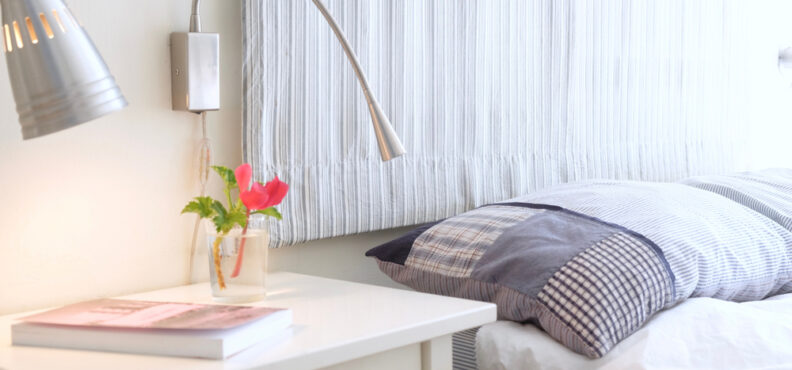
Nightstand rules change slightly when lighting enters the picture. The combined height of the nightstand and lamp should allow the light source to sit around eye level when you are sitting up in bed.
For most setups, a lamp between 24 and 27 inches tall works well on a standard nightstand. If your nightstand is taller, choose a shorter lamp. If your nightstand is lower, a taller lamp restores balance.
Wall-mounted sconces remove lamp height from the equation. In this case, focus entirely on matching the nightstand height to the mattress. Sconces are a strong option in small bedrooms where surface space is limited.
Adjust for Small Bedrooms and Condos
Smaller bedrooms require tighter planning, but the same rules still apply. Height consistency matters even more when space is limited because visual clutter shows quickly.
In narrow rooms, choose slimmer nightstands with clean lines. Floating nightstands mounted to the wall can work if installed at the correct height. They keep the floor clear and make the room feel larger. The top of a floating nightstand should still align with the mattress.
Avoid pushing nightstands into corners or against walls at odd angles. Even in tight spaces, alignment with the bed should come first.
Break the Rules Carefully
Design rules exist to create comfort, but there are moments when breaking them works. Mixing nightstand styles on each side of the bed can look intentional if the heights match. Using a small dresser as a nightstand works if its height aligns with the mattress and the room can support the scale.
What matters most is function. If you reach for your lamp easily, your items fit without clutter, and the room feels balanced, the nightstand is doing its job.
Final Checklist Before You Buy
Before choosing a nightstand, measure your mattress height, note your bed width, and list what you store bedside. Confirm walkway clearance and think about lighting. These steps prevent returns and help your bedroom feel finished rather than improvised.
Nightstands may be small, but when chosen correctly, they anchor the entire bedroom.
You Can Find Great Deals at Arrow Furniture
We help you choose nightstands that match your bed, your space, and how you live, with options that fit real Toronto homes. Arrow Furniture has locations in Toronto, Scarborough, and Mississauga, making it easy to see sizes, finishes, and proportions in person.