

Decor

How to Choose a Dining Table That Seats More Without Feeling Crowded
Choosing a dining table that fits more people without squeezing the room is about balance, not size alone. We see this problem often in Toronto homes where dining areas share space with kitchens or living rooms. The right table creates flow, keeps chairs moving easily, and still feels generous when guests arrive. With a clear plan around shape, scale, and seating, you can add capacity without sacrificing comfort.
Start With the Room, Not the Guest List
The smartest dining table choices begin with the room’s true dimensions and traffic patterns. Measure wall to wall, then subtract space for walkways, door swings, and nearby furniture before thinking about how many seats you want. A table that technically fits but blocks movement will always feel crowded, even with fewer people.
As a rule, allow at least 36 inches between the table edge and walls or other furniture, and closer to 42 inches in busy pass-through areas. This spacing lets people sit and stand without bumping chairs, which matters more than adding one extra seat. Once you know how much usable space you actually have, your table options become much clearer.
Choose a Table Shape That Works With the Layout
The shape of your dining table often matters more than its length when it comes to seating more people comfortably. Certain shapes simply use space better in smaller or shared rooms.
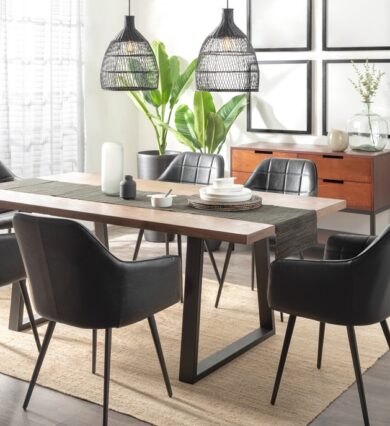
Rectangular tables seat the most people per square foot and work best in long or open rooms. They line up naturally with walls and leave clean walkways on both sides. If your space allows for a longer footprint, this shape gives you the highest seating return.
Round and oval tables reduce sharp corners and improve movement around the table. A round table is ideal for tighter rooms because it keeps traffic flowing, while an oval table combines that softness with extra length. Square tables work best in perfectly proportioned rooms but tend to limit seating unless they are large, which can overwhelm the space.
Understand Real Seating Measurements
Comfortable seating depends on inches, not assumptions. Each seated person needs about 24 inches of table edge space to eat comfortably, and about 12 to 15 inches of table depth for place settings. Tables that ignore these dimensions may look fine but feel cramped once plates and glasses are down.
Leg placement matters as well. Tables with thick legs at the corners often lose usable seating because chairs cannot slide in fully. Pedestal bases or inset legs free up edge space and allow more chairs without crowding knees. When comparing tables with similar sizes, the base design often makes the difference.
Extendable Tables Add Seats Only When You Need Them
Extendable dining tables are one of the most practical solutions for seating more people without permanent bulk. These tables stay compact for daily use and expand only when guests arrive, which keeps the room open most of the time.
Look for extension systems that feel solid and easy to use, such as butterfly leaves or hidden center leaves. A table that expands smoothly is more likely to be used, and better engineering usually means fewer gaps and wobble once extended. When shopping, sit at the table in both its closed and open positions to make sure it still feels balanced.
Match Chair Style to Seating Goals
The table may set the limit, but chairs often determine whether extra seating feels comfortable or cramped. Bulky armchairs reduce how many people fit, especially along the sides of rectangular tables. Slim-profile chairs or benches allow you to add seats without increasing the table size.
Benches work particularly well on one side of the table or along a wall. They slide fully underneath when not in use and seat more people than individual chairs in the same space. Chairs with open backs or narrower frames also create visual space, which helps the dining area feel lighter even when fully occupied.
Keep Sightlines Open to Reduce Visual Crowding
A dining table can feel crowded even when measurements are correct if it visually overwhelms the room. Heavy materials, thick aprons, and dark finishes absorb light and make the space feel tighter. Lighter finishes, slimmer tops, and open bases reflect light and keep the room feeling open.
Glass or light wood tables are especially effective in smaller dining areas. Even when fully set, they allow the eye to travel through the space instead of stopping at a solid block. This visual breathing room makes a big difference when seating more people in compact Toronto condos or townhomes.
Plan for Movement, Not Just Seating
A dining area should support movement as easily as it supports meals. People need space to pull out chairs, walk behind seated guests, and carry dishes without squeezing through gaps. When testing table placement, simulate real use by pulling chairs out and walking the main paths.
If the table blocks a natural walkway, consider rotating it, changing the shape, or choosing a slightly smaller size with an extension option. A table that allows smooth movement will always feel more comfortable, even with more people seated.
Balance the Table With the Rest of the Room
Dining tables rarely exist in isolation. Nearby sideboards, kitchen islands, or sofas all affect how the space feels. Keeping surrounding furniture lower or visually lighter helps the dining area handle a larger table without feeling heavy.
If your dining space shares a room, define the area with lighting rather than size. A properly scaled pendant or chandelier anchors the table and makes the seating feel intentional instead of crowded. This approach lets you seat more people without increasing the table footprint.
Test Before You Commit
The best way to avoid crowding is to test tables in person. Sit at them, slide chairs in and out, and imagine a full meal in progress. Pay attention to legroom, elbow space, and how easily you can move around the table.
We always recommend bringing your room measurements and seating goals when shopping. Comparing options side by side makes it easier to see how small design differences affect comfort and capacity. A table that looks similar online can feel very different once you sit down.
You Can Find Great Deals at Arrow Furniture
We help Toronto-area homes choose dining tables that seat more people while keeping rooms open and comfortable. Our teams understand real room constraints and can guide you through shapes, extensions, and seating options that work in everyday life. With locations in Toronto, Scarborough, and Mississauga, we make it easy to see and test the right table in person.